
Why design thinking is essential for teenagers (and why it’s missing from schools)

Many teenagers have no trouble thinking; they struggle to understand how to put their thoughts into practice. Between grades, tests and correct answers, they rarely have the space to explore, make mistakes and come up with solutions. This is where design thinking comes in: not as a theory, but as a practical way of learning to turn doubts and frustrations into opportunities.
Why design thinking starts with empathy

All posts Design and children 7 min read Why design thinking starts with empathy Second book Starting the second book in a saga is doubly exciting. It means picking up the lives, thoughts and characteristics of each character again and bringing them back to life on the pages of the book. I am starting to […]
Discovering Design Thinking
Have you ever wondered how cool gadgets, fun toys, or amazing playgrounds are created? We’re going to dive into the magical world of design thinking. It’s a super fun way to solve problems and come up with awesome ideas.
Design thinking for kids

Design thinking is a creative and systematic approach to problem-solving that encourages innovative solutions. But what exactly is design thinking, and why is it beneficial to teach it to children? Let’s explore!
Iteration and revision
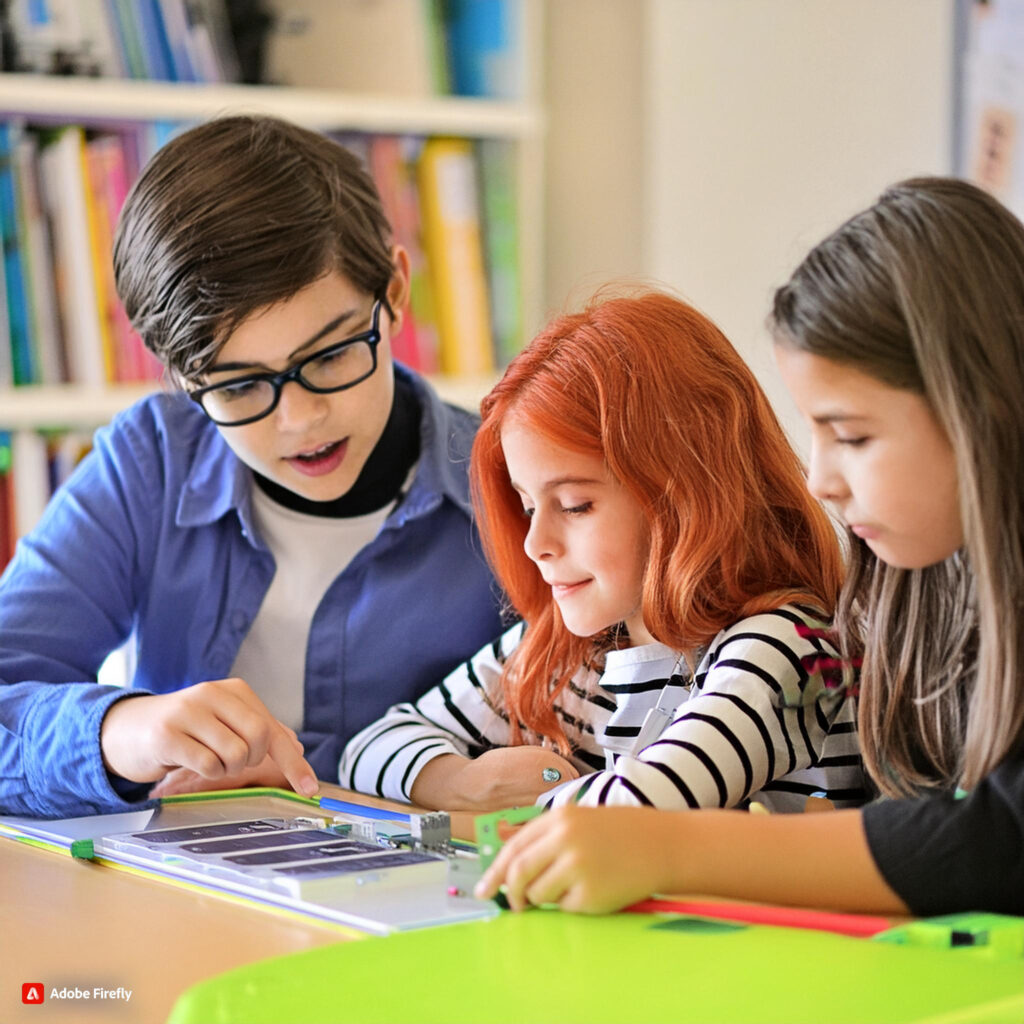
Learning design at a young age enhances visual literacy, communication skills, and adaptability, empowering children to think critically and express their ideas with confidence through an effective design thinking process that focuses on iteration: testing and refining an idea based on feedback until it’s as effective as possible. To absorb and implement constructive criticism, learners will need grit, a growth mindset, and adaptability, fostering the Innovator’s Mindset.
Empathy and Civic Responsability

The design thinking process does not require learners to generate ideas from scratch. Instead, it prompts them to empathise with the end user. Rather than making assumptions, learners develop their ability to understand different perspectives and see things from another person’s point of view. This prepares them to be helpful rather than harmful in their future pursuits.
Foster creative confidence

The design thinking process focuses on generating ideas and experimenting with new approaches, rather than finding the correct solution. This helps students develop self-confidence by understanding that ‘failing’ is a natural part of the process and that making mistakes is acceptable.
Critical thinking and problem-solving

Design thinking empowers young people to develop their problem-solving abilities. It instructs them in identifying and defining problems, generating solutions, and testing those solutions. This prepares them to navigate the complexities of real-world problem-solving through a structured approach. By encouraging children to think creatively and question established conventions, design thinking promotes critical thinking skills.