Why Design Thinking is essential for teenagers (and why it's missing at school)
It’s not a lack of ability
Many teenagers have no trouble thinking; they struggle to understand how to put their thoughts into practice. Between grades, tests and correct answers, they rarely have the space to explore, make mistakes and come up with solutions. This is where design thinking comes in: not as a theory, but as a practical way of learning to turn doubts and frustrations into opportunities.
What if the problem isn’t the young people themselves, but the way we train them to think?
Many teenagers today don’t have a problem with ability.
They have a problem with space. Space to think. Space to make mistakes. Space to question things.
And so something paradoxical happens: young people full of insights, ideas and sensitivity find themselves feeling like they’re wrong… simply because they don’t fit into a system that measures everything with a number.
This raises an important question:
👉 how can we help teenagers develop critical thinking and real problem-solving skills?
One possible answer is design thinking. But not as a business method. As a way of being in the world.
What design thinking really is (explained without the buzzwords)
Design thinking isn’t just a five-step process. It’s a mindset.
It means:
not setting for the first answer
questioning the problem
really listening to people
generating alternatives
testing, falling, improving
In other words: 👉 turning frustration into action.
And that is exactly what many young people are missing: not ideas, but the tools to put them into practice.
The real problem: children trained to answer, not to think
At school, we learn to:
find the right answer
do it quickly
avoid making mistakes
But in real life, we need something else:
ask the right questions
tolerate uncertainty
come up with new solutions
When these two worlds don’t meet, frustration arises.
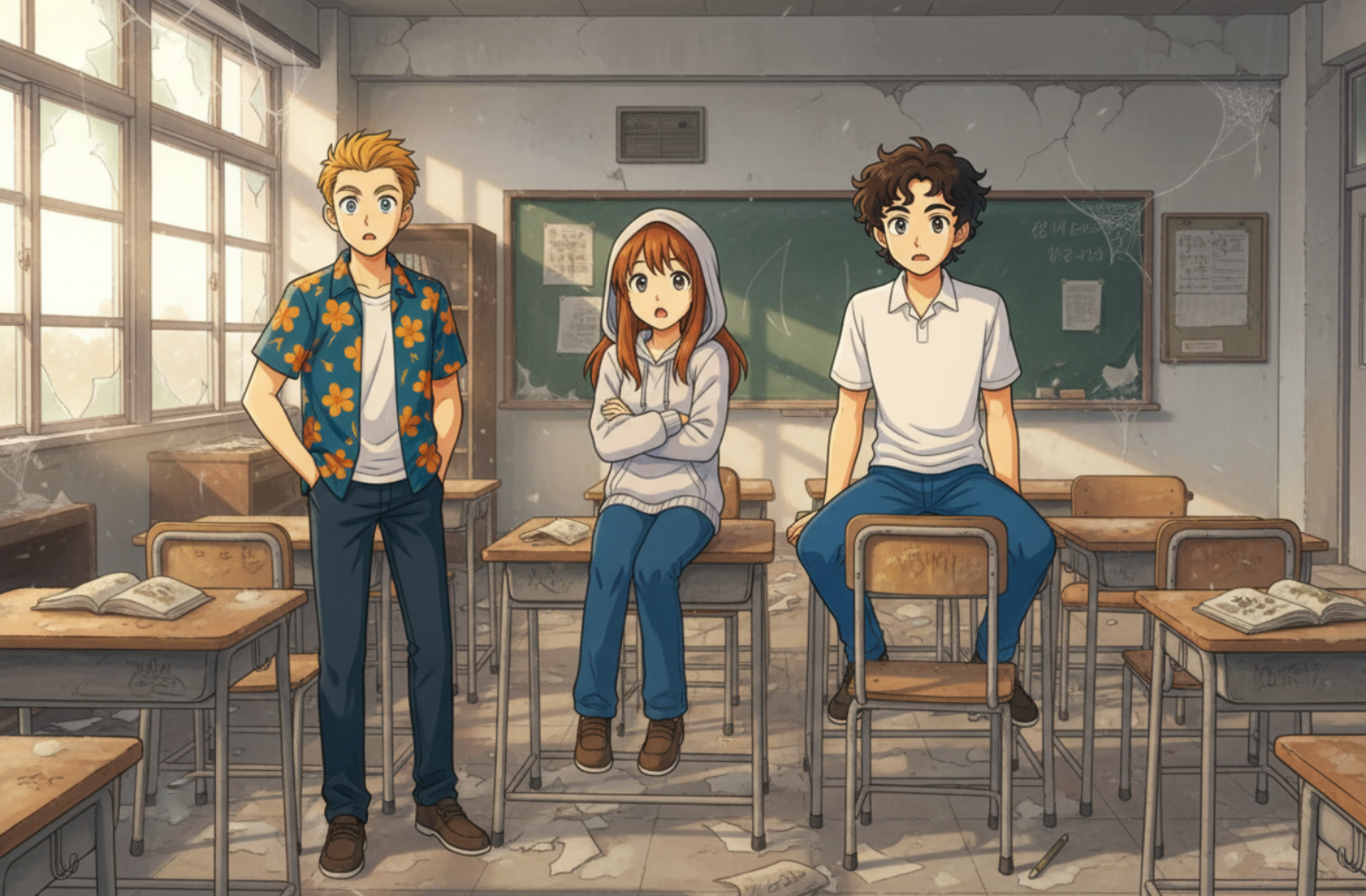
It is this very gap that gave rise to the story of Room9. Erased by a number.
Room 9: when the rebellion becomes a project
At school, we learn to:
find the right answer
do it quickly
avoid making mistakes
But in real life, we need something else:
ask the right questions
tolerate uncertainty
come up with new solutions
When these two worlds don’t meet, frustration arises.
It is this very gap that gave rise to the story of Room9. Erased by a number.
1. From frustration to the problem (Problem Framing)
At first, their reaction is the same as everyone else’s: “The grading system is unfair.”
But in Room 9, something different happens. The question changes:
“What’s really wrong with the marks?”
“Why do they make us feel this way?”
This is true critical thinking. Not complaining. Redefining the problem.
2. Understanding people (Empathy)
The students start to observe. To talk. To share their stories. They don’t design for ‘students’ in general.
They start from real experiences:
feeling invisible
feeling labelled
feeling diminished
This is where something powerful emerges: the realisation that behind every number there is a story.
3. Generating ideas (Uncensored creativity)
In Room 9, there are no wrong ideas. They write. They draw. They imagine alternatives.
It’s time for:
“What if…?”
What if the report card were a sentence?
What if it described the effort, not just the result?
What if it included emotions?
This is design thinking.
But it’s also freedom.
4. Prototyping (making ideas real)
There’s one difference between thinking and designing:
👉 doing.
The protagonists create concrete versions of their system:
sheets
maps
phrases
new formats
They make mistakes. They redo. They simplify.
Until the Poetic Counter-Record is born. A real alternative. Not perfect. But alive.
5. Sharing (and letting the project change)
The project doesn’t stay in Room 9.
It’s left lying about. Found by others. Interpreted.
And something fundamental happens: the project grows thanks to others.
This is a huge lesson for the students: ideas aren’t objects to be defended.
They’re organisms to be allowed to evolve.
Why is all this so important for teenagers?
Because it develops skills that schools often fail to train:
Critical Thinking
Questioning what seems ‘normal’
Problem solving
Turning a problem into a project
Empathy
Understanding others, not just oneself
Self-efficacy
Feeling able to make a difference
Resilience
Seeing mistakes as part of the process
The point isn’t design thinking.
It’s about giving young people an active role. Not all teenagers will become designers. But they will all face problems.
The question is:
👉 will they tackle them passively or actively?
Room 9 shows a different possibility: that even within a rigid system, spaces can be opened up.
That frustration isn’t the end. But the beginning.
What if we started here?
Perhaps we don’t need to revolutionise schools overnight. Perhaps we just need to start with something simple:
👉 teaching young people how to think, not just what to say.
And perhaps creating, even if only for an hour, a ‘Room 9’.