Junior Design > Mission
Teaching design to children sparks creativity and fosters problem-solving skills, preparing them for a future of innovation.
Our offer
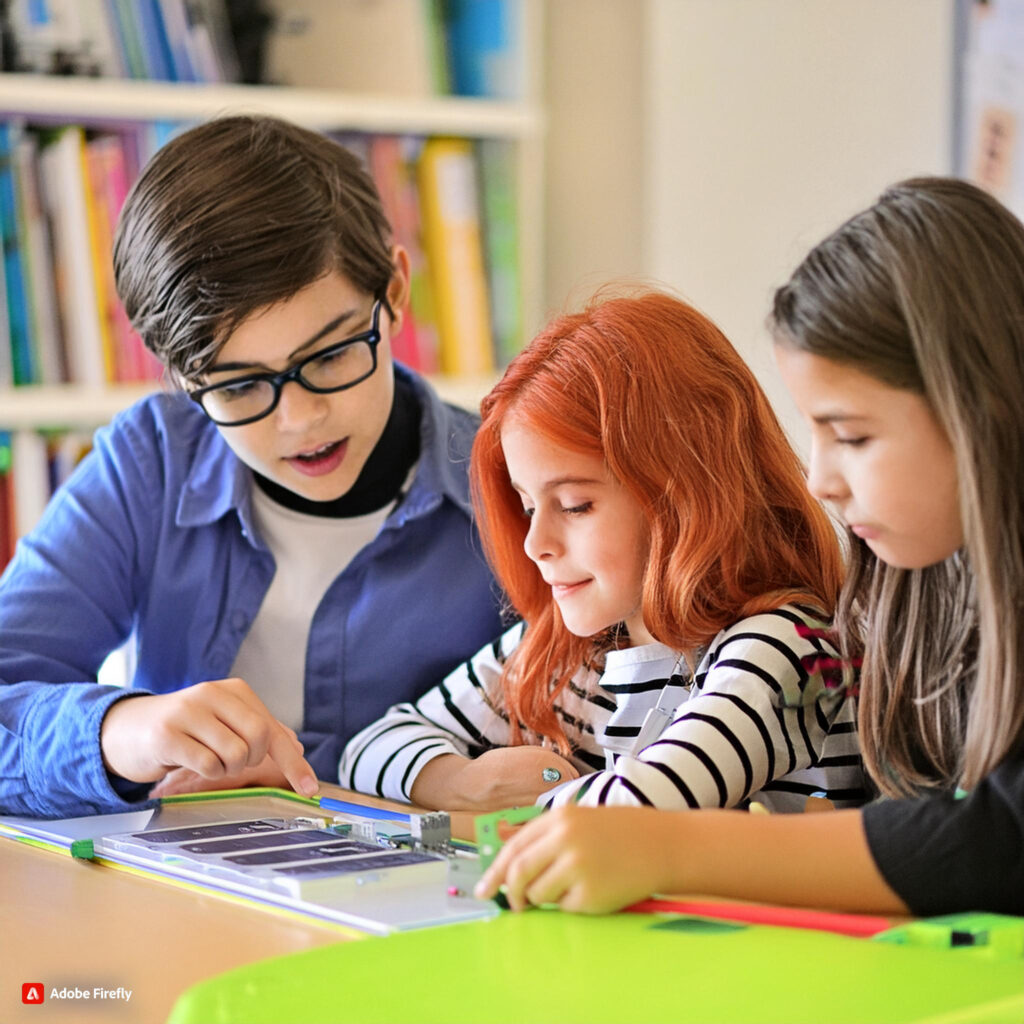
Introducing children to the power of design thinking and its far-reaching impact on the world can help them develop critical problem-solving skills and a deeper understanding of the way in which creativity and innovation can shape the world around them.
The design thinking process focuses on generating ideas and experimenting with new approaches, rather than finding the correct solution. This helps students develop self-confidence by understanding that ‘failing’ is a natural part of the process and that making mistakes is acceptable.
The design thinking process does not require learners to generate ideas from scratch. Instead, it prompts them to empathise with the end user. Rather than making assumptions, learners develop their ability to understand different perspectives and see things from another person’s point of view. This prepares them to be helpful rather than harmful in their future pursuits.
Learning design at a young age enhances visual literacy, communication skills, and adaptability, empowering children to think critically and express their ideas with confidence through an effective design thinking process that focuses on iteration: testing and refining an idea based on feedback until it’s as effective as possible. To absorb and implement constructive criticism, learners will need grit, a growth mindset, and adaptability, fostering the Innovator’s Mindset.
Explore
At our website, children can learn design thinking through fun and engaging activities. From role games to quizzes, presentations to projects, and more, we offer a variety of content to spark their creativity and imagination.
The initial stage requires grasping the needs and challenges of the user. For example, when a designer is creating a toy for a playground, it is essential to comprehend what children likes and displakes..
After gathering information, the problem is clearly defined. Using the same example, the designer might define the problem as, “Children need a toy that is fun, safe, and inclusive.”
This is the brainstorming stage. The student might come up with several different toy ideas meeting the defined criteria.
After creating a physical or digital representation of the best idea, the designer tests it with the user and gathers feedbacks. He then revise the prototype based on the feedback and test again.
Lorem ipsum dolor sit amet, consectetur adipiscing elit. Ut elit tellus, luctus nec ullamcorper mattis, pulvinar dapibus leo.