How many years have we been hearing the same old mantra? “Study hard, get good marks, get a qualification, and the path will be clear for you.” For generations, the concept of a “good student” has been synonymous with someone capable of listening quietly, memorising a chapter of history or a mathematical formula, and repeating it faithfully during a oral or written test.
But today, as you watch your child study to get top marks in a memory test, there is an uncomfortable truth we must face: Artificial Intelligence will always get top marks in that test. And it will do so in less than three seconds.
We are witnessing a huge educational paradox: we continue to assess our children based on skills in which computers are – and always will be – infinitely better than them.
If we continue to raise children with the mindset of a world that no longer exists, we risk rendering them obsolete before they even enter the job market.
This disconnect has not gone unnoticed by the world’s most prestigious universities. Tony Wagner, a renowned researcher at the Harvard Innovation Lab, summed up the issue bluntly but very clearly:
“The world no longer cares about what students know, but about what they can do with what they know.”
In his field research, Wagner has identified what he calls the “7 Survival Skills” for the future. Guess what? Memorising facts isn’t on the list. Instead, at the very top we find:
- Critical thinking and problem-solving.
- Curiosity and imagination.
- Agility and adaptability.
If the answers are everywhere, free and accessible to everyone thanks to algorithms, true human value no longer lies in possessing the answer. It lies in knowing how to ask the right question.
As a designer, this scenario doesn’t scare me. On the contrary, it excites me. In my day-to-day work, I’m not paid to ‘know things’, but to design solutions to problems that change every week. To do this, I use a specific method: Design Thinking.
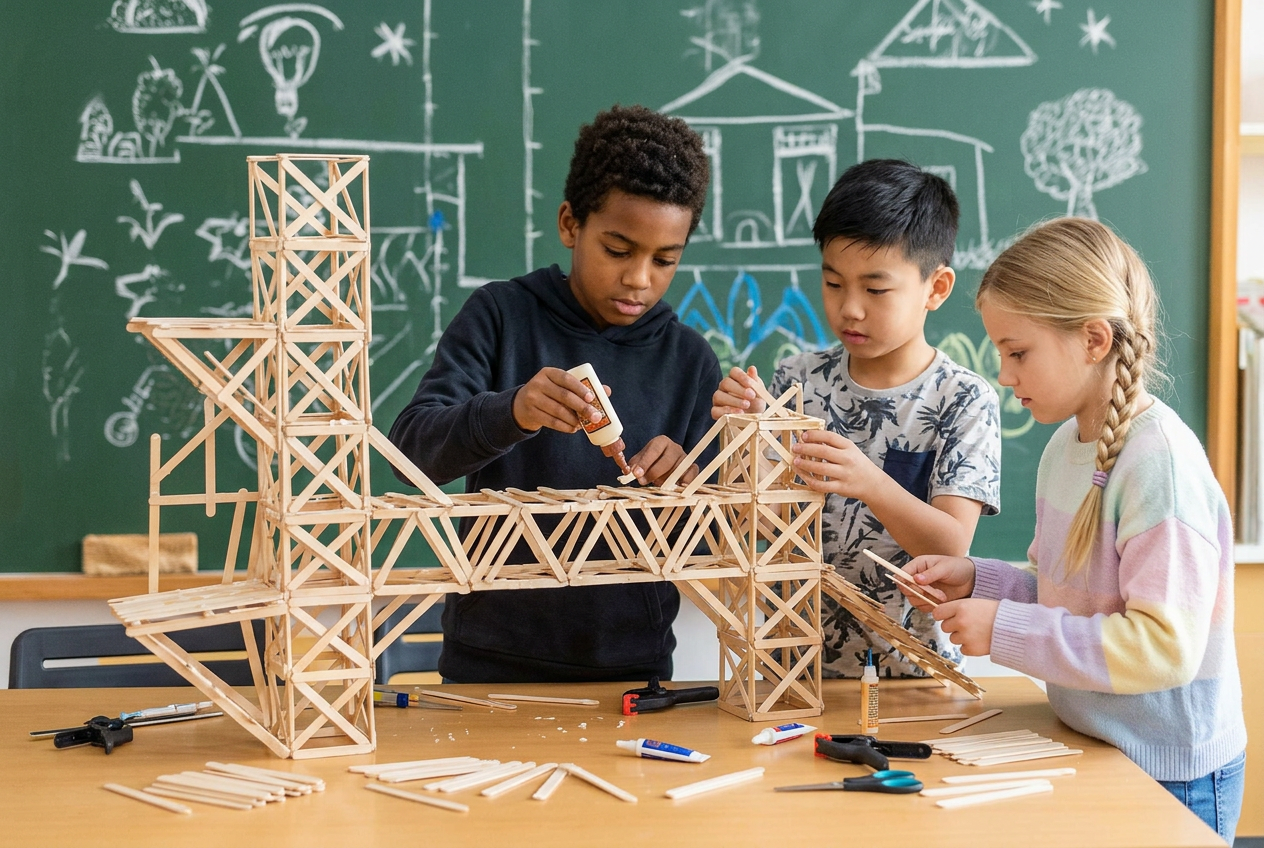
Design Thinking is the exact opposite of the old, rote-learning approach to education. Whereas traditional schooling says, “Here’s the answer, learn the lesson”, Design Thinking says, “Here’s a real-world problem, explore it, make mistakes, create a prototype and find your own solution”.
When we apply this approach to the lives of children and young people, we turn the ‘good student’ paradox on its head:
- We encourage mistakes: At school, a mistake is a red mark in a notebook (a failure). In design, a mistake is simply ‘Prototype 1.0’, a necessary step towards understanding what isn’t working and making improvements.
- We cultivate critical thinking: We do not passively accept a ready-made solution; we learn to break it down and ask ourselves, “Why does it work this way? How can I improve it?”
- We stimulate curiosity: We value questions, not just the correct answers.
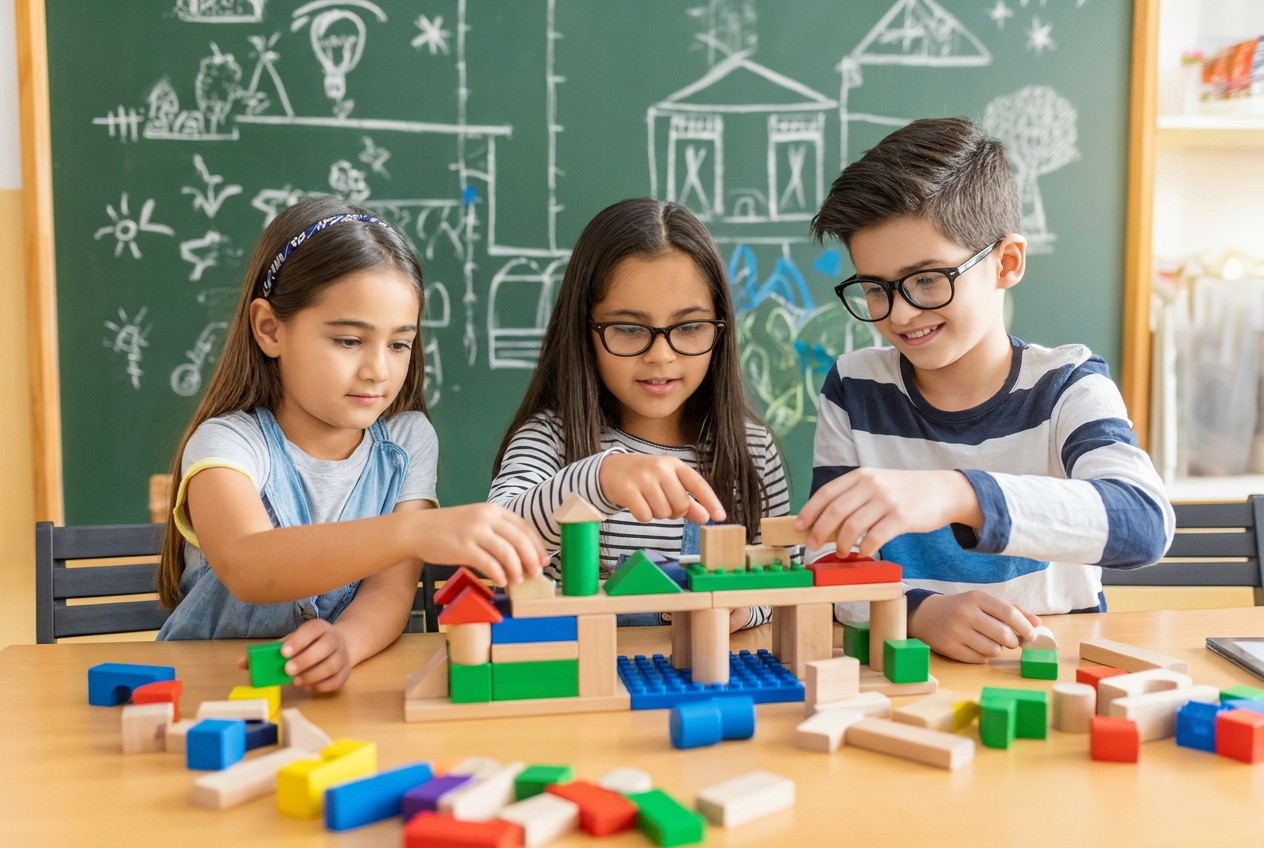
We cannot change the government’s school curricula overnight, but we can change the educational environment in which our children grow up at home. We must start replacing bookshelves full of ready-made answers with experiences that stimulate the imagination and encourage hands-on learning.
It is precisely with this aim in mind that I decided to combine my background as a Junior Designer with the needs of modern parents and educators. I took the methodological framework of Design Thinking and ‘translated’ it into a series of books and practical activities designed for children and teenagers.
The aim of my books is not to turn your child into a professional designer by the age of 12. The aim is to give them the right mindset so they are not daunted by an uncertain future, teaching them to use creativity, empathy and critical thinking as real shields against automation.
The future of Gen Beta does not depend on how much knowledge they manage to accumulate, but on how many problems they can solve. Let’s start designing it together with them.
Do you want to challenge your child to think like a designer? Explore the My Books section here on juniordesign.org and discover the prototyping and creative problem-solving challenges designed for children and teenagers.